Best amber light bulbs and red bulbs for sleep (2026)

Amber bulbs (around 1800K) and red bulbs (620 to 640 nm) give off little of the light that tells your body clock it is still daytime, so evening lamps delay melatonin less. Use them dim, for the last 2 to 3 hours before bed, or get a tunable smart bulb that shifts on a schedule.

Updated Oct 20, 202610 products compared

DisclosureSome links earn us a commission. That never moves a product up the list. How we make money

Quick picks

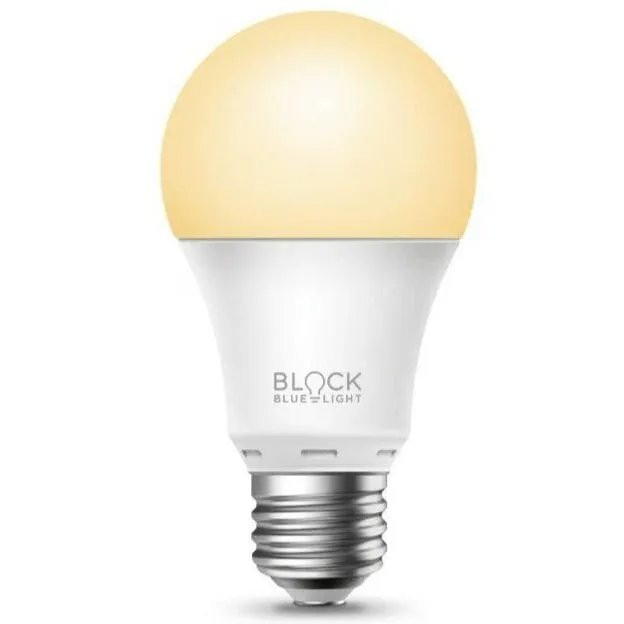
  1. Best amber bulbBlockBlueLight Sweet Dreams Sleep Light Bulb
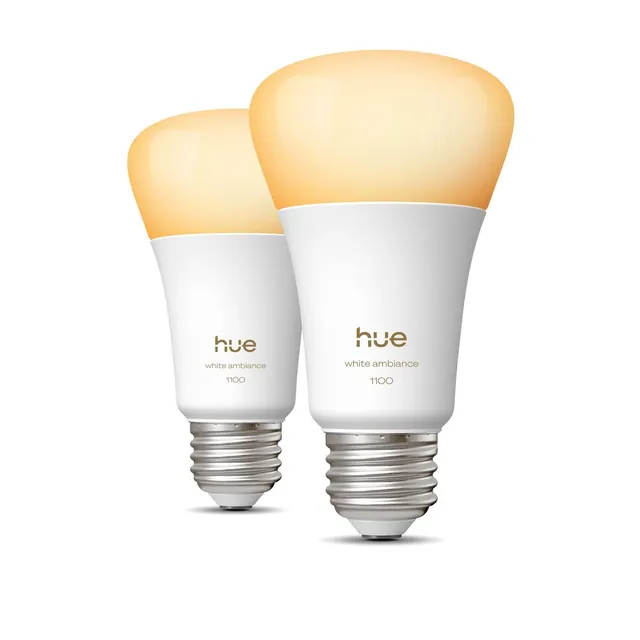
  2. Best smart bulbPhilips Hue White Ambiance A19 (1100 lm, 2-pack)
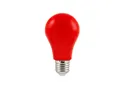
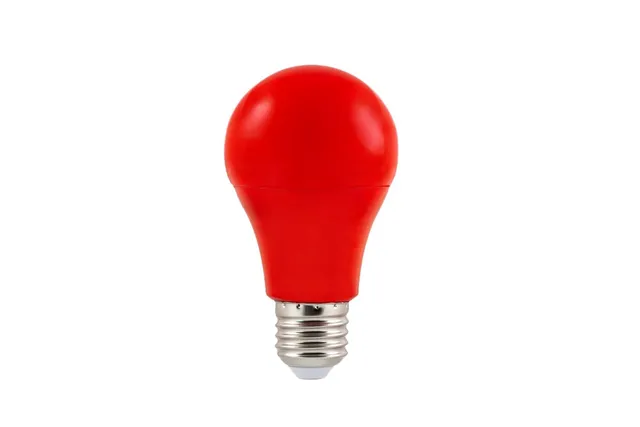
  3. Best red bulbBon Charge Blue Light Blocking Light Bulb (red)
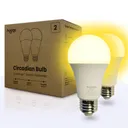
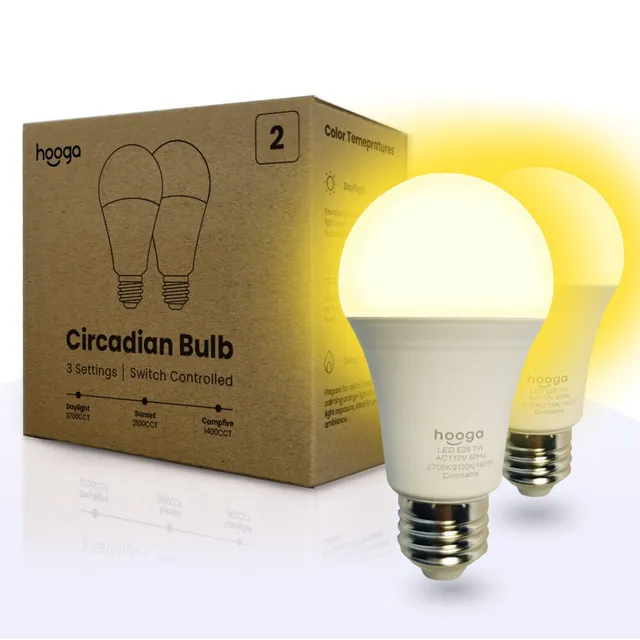
  4. Best budgetHooga Circadian Full Spectrum Light Bulb (2-pack)
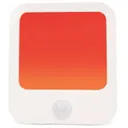
  5. Best night lightBlockBlueLight Twilight Deluxe Plugin Red Night Light

Does it work?

CMixed evidence

Evening room light reliably suppresses melatonin. Room light under 200 lux before bed delayed melatonin onset in 99% of 116 adults, and 50% suppression happened at about 25 lux on average. Blue-depleted evening lighting cut melatonin suppression from 45% to 15% and added 8 minutes of sleep in a 12-person crossover trial, but a 476-patient hospital trial saw no change in length of stay. No trial we could locate has tested a consumer amber or red bulb on sleep at home.

Studies behind this grade

Sunlight first

No bulb replaces daylight. People camping for a week on natural light got over 4 times more daytime light than at home (4,487 vs 979 lux), and their body clocks moved about 2 hours earlier. Get bright daylight by day and save amber or red bulbs for the evening. Why morning sunlight matters.

Sources

Side by side

ProductColour / CCTBlue light (brand claim)BrightnessDimmingFlicker dataControlPrice
BlockBlueLight Sweet Dreams Sleep Light BulbAmber, 585 nm peak (1800K)0% at 380–500 nm700 lmNo"Zero flicker" claim, no dataWall switch$22
Philips Hue White Ambiance A19 (1100 lm, 2-pack)Tunable 1000–20,000KNo claim1,100 lm at 4000K0.2–100%Not publishedApp, Bluetooth or Zigbee; bridge for Natural light$55
Bon Charge Blue Light Blocking Light Bulb (red)Red, 630 nm0% at 380–580 nm600–700 lm (claimed)No"Flicker free" claim, no dataWall switch$25
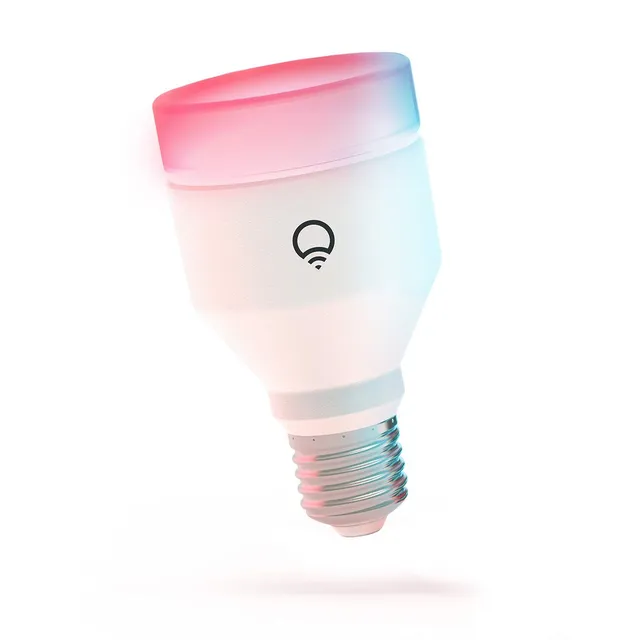
LIFX SuperColor A19 (1100 lm)Tunable 1500–9000K + colourNo claim1,100 lm1–100%Not publishedApp, Wi-Fi or Matter, no hub$25
Chroma The Bulb660 nm red / 1600K amber / 3800K dayMel-DER 0.002 red, 0.153 amber, 0.81 day (brand)Not publishedNo (amber and red pre-dimmed)Flicker index 0.0036 at 2 ft (brand claim)Wall switch cycles modes$30
Hooga Circadian Full Spectrum Light Bulb (2-pack)2700K / 2100K / 1400K modes"Zero blue" in 1400K modeNot published"Dimmable" claim, not explained"Flicker-free" claim, no dataWall switch cycles modes$30
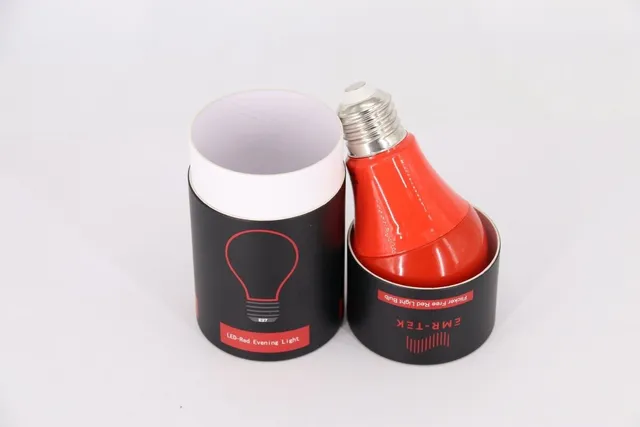
EMR-TEK Sunset Light Bulb (red)Red, peak 662 nm, dominant 628 nm (maker spectrum)Removes blue and green; B 0.0% on spectrum printout–No"Zero flicker" claim, no dataWall switch$50
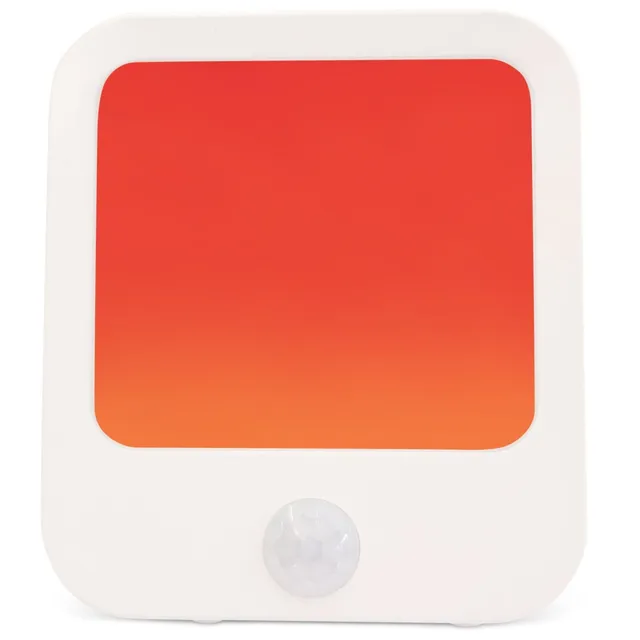
BlockBlueLight Twilight Deluxe Plugin Red Night LightRed, 600–640 nm0% blue and green0–60 lmVariable"Flicker free" claim, no dataPlug-in; motion or constant mode$35
Bon Charge Full Spectrum Light Bulb5000K / 2500K / 1700K modes"Zero blue" in 1700K mode379–430 lm by modeNo"Flicker free" claim, no dataWall switch cycles modes$35
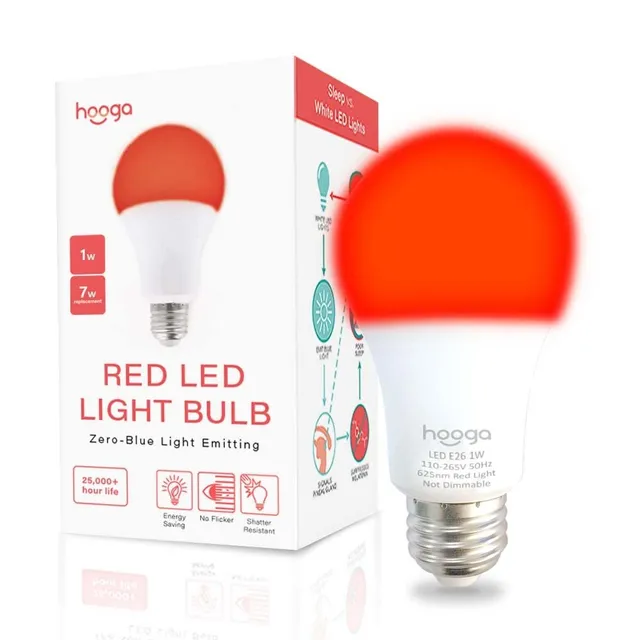
Hooga Sleep Light Bulb (625 nm red)Red, 625 nm"Zero" blue light37 lm (listing conflicts)Not stated"Non-flickering" claim, no dataWall switch–

Prices are approximate list prices in USD at the time we checked and change often.

Chroma The Bulb

Chroma The Bulb

by Chroma · $30

Switch-controlled bulb with 660 nm red, 1600K amber and 3800K daylight modes, and published melanopic ratios for each. No lumen figure; sold out when checked.

Colour / CCT660 nm red / 1600K amber / 3800K day

Best for: One bulb that does daytime, evening and night light from a normal switch, with no app or hub

What to look for

Colour or wavelength
For the last 2 to 3 hours before bed, choose amber at 1800K or lower, or red that peaks at 620 nm or longer. A tunable bulb should reach 2000K or lower at its warm end.
Brightness for the room
About 600 to 700 lm suits a main evening lamp. Under 60 lm suits a night light or nursery. Expert guidance caps evening light at 10 lux melanopic EDI at the eye and the sleeping room at 1 lux.
Dimming
Brightness matters as much as colour. In one lab study, 50% melatonin suppression happened at about 25 lux. Smart bulbs that dim to 1% or lower give the most control; most fixed amber and red bulbs cannot be dimmed.
Proof of the blue claim
Look for a published spectrum and a stated blocked range, such as 0% at 380 to 500 nm for amber or 380 to 580 nm for red. A "100% blue-free" badge with no graph or lab name is a marketing claim.
Flicker data
"Flicker-free" is rarely backed by numbers. If a brand publishes percent flicker, 10% or less at 120 Hz meets the IEEE 1789 low-risk guideline.
Control
Fixed-colour bulbs need a bulb swap or a second lamp for daytime. Tunable bulbs follow a schedule, but check whether automation needs a hub. Philips Hue's Natural light scene needs a Hue Bridge.

How amber light bulbs and red bulbs work

Amber light bulbs (around 1800K) and red bulbs (620 to 640 nm) give off little of the blue-cyan light that most strongly signals daytime to your body clock. That makes them a simple way to stop evening lamps from delaying melatonin. They work best kept dim and used for the last 2 to 3 hours before bed.

The retinal cells that pass light signals to the clock contain a pigment called melanopsin, which responds best to light around 480 to 490 nm.1 An amber LED that peaks near 585 nm, or a red LED near 630 nm, puts out little energy in that range. At the same brightness, it should move the clock less than a standard white bulb.

“Blue light blocking light bulb” is a marketing name for the same idea. Nothing is blocked. The bulb simply makes little or no blue light to begin with.

Tunable “circadian” smart bulbs work differently. They run cool and bright in the morning and fade to warm and dim in the evening on a schedule, so one bulb covers the whole day.

What the research says about evening light

The case against bright evening light is strong. In 116 young adults, ordinary room light (under 200 lux) in the hours before bed delayed melatonin onset in 99% of people and shortened melatonin production by about 90 minutes compared with dim light.2 A dose-response study in 55 adults found 50% melatonin suppression at about 25 lux on average, with individual thresholds ranging from 6 to 350 lux.3 At home, melatonin onset came about an hour later after a week of bright evening lighting (about 65 lux) than after a week of dim lighting (about 3 lux) in 8 adults.4

Spectrum matters too, though the evidence is thinner. In a Norwegian hospital unit, 12 healthy adults spent 5 days under blue-depleted evening lighting and 5 days under standard lighting of similar brightness. Melatonin was suppressed by 15% versus 45%, and total sleep was 8.1 minutes longer under the blue-depleted light.5 A much larger trial in the same unit, with 476 psychiatric inpatients, found no difference in length of stay (7.1 vs 6.7 days), though patients improved slightly more on clinician ratings.6 In a 12-person lab study, red light at 40 lux did not reduce nighttime melatonin, while blue light at the same level did.7

What is missing is a trial of the bulbs sold here. No study we could locate has tested a consumer amber or red bulb on sleep at home. That gap is why this category gets a C.

How dim should evening light be

An international expert consensus recommends no more than 10 lux melanopic EDI at eye level from 3 hours before bedtime, and no more than 1 lux in the bedroom during sleep.1 Melanopic EDI measures how strongly light drives the clock, and it is not printed on bulb boxes.

In practice that means two changes: warmer colour and less light. An amber or red bulb handles the first. A dimmer, a lower-output bulb or a lamp below eye level handles the second. A lux meter gives a rough reading of your rooms, and the lux levels tool puts the number in context.

Amber vs red vs tunable bulbs

Type Best for Trade-off
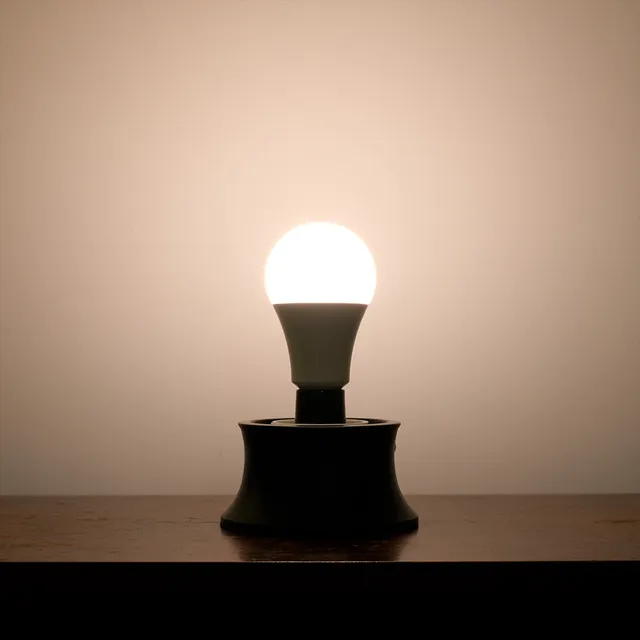
Amber, about 1800K Living room and reading lamps after sunset Everything looks orange; most are non-dimmable
Red, 620 to 640 nm Bedrooms, bathrooms, night feeds Dim, and colours are hard to tell apart
Tunable smart bulb One bulb for the whole day on a schedule Costs more; neither Hue nor LIFX publishes a spectrum
Red night light Hallways and nurseries Only useful at very low output

For most homes the simplest setup is amber bulbs in the lamps you use after dinner and a red bulb or night light where you go at night. Tunable bulbs suit people who also want brighter, cooler light in the morning and do not mind an app. For more on colour choice, see the best light color for sleep.

How to set up evening lighting

  1. Swap the bulbs in lamps you actually use after sunset. Keep bright overhead lights for daytime.
  2. Switch over about 3 hours before bed, the window the expert recommendations use.1
  3. Turn overhead lights off rather than relying on colour alone. Brightness drives much of the effect.
  4. Handle screens separately, with blue light glasses or a screen filter from the circadian apps guide.
  5. Keep the bedroom dark during sleep. A red night light on motion mode beats one left on all night, and blackout curtains deal with streetlight.
  6. Get bright light in the morning. Dim evenings work best next to bright days, and the light exposure planner shows sunrise times and light targets for your location.

What “full spectrum”, “circadian” and “flicker-free” mean on the box

“Full spectrum” on a bulb box is the brand’s own description, so check lumens and colour rendering (CRI) instead. Bon Charge’s full spectrum bulb, for example, is rated at about 400 lm in its 5000K mode, half the output of a typical 60 W-equivalent bulb (800 lm).

“Circadian” on a bulb usually means it changes colour temperature. It does not mean the bulb was tested for effects on sleep or body-clock timing.

“Flicker-free” is rarely backed by data. Under the IEEE 1789 recommended practice, light that flickers at 120 Hz should stay at or below 10% flicker for low risk.8 None of the bulbs on this list publish a flicker percentage on their product pages.

Who should skip these bulbs

If you already keep evenings dim and sleep well, new bulbs add little. If you work nights and sleep by day, darkness during your sleep and timed light on shift matter more; see the shift work sleep guide. If you have bipolar disorder or another condition treated with light, talk to your clinician before changing your light routine. Nothing here is medical advice.
Footnotes

  1. Brown TM, et al. Recommendations for daytime, evening, and nighttime indoor light exposure to best support physiology, sleep, and wakefulness in healthy adults. PLoS Biol. 2022;20(3):e3001571. doi:10.1371/journal.pbio.3001571 ↩ ↩2 ↩3

  2. Gooley JJ, et al. Exposure to room light before bedtime suppresses melatonin onset and shortens melatonin duration in humans. J Clin Endocrinol Metab. 2011;96(3):E463-72. doi:10.1210/jc.2010-2098 ↩

  3. Phillips AJK, et al. High sensitivity and interindividual variability in the response of the human circadian system to evening light. Proc Natl Acad Sci USA. 2019;116(24):12019-12024. doi:10.1073/pnas.1901824116 ↩

  4. Burgess HJ, Molina TA. Home lighting before usual bedtime impacts circadian timing: a field study. Photochem Photobiol. 2014;90(3):723-6. doi:10.1111/php.12241 ↩

  5. Vethe D, et al. The evening light environment in hospitals can be designed to produce less disruptive effects on the circadian system and improve sleep. Sleep. 2021;44(3):zsaa194. doi:10.1093/sleep/zsaa194 ↩

  6. Kallestad H, et al. Clinical benefits of modifying the evening light environment in an acute psychiatric unit: a single-centre, two-arm, parallel-group, pragmatic effectiveness randomised controlled trial. PLoS Med. 2024;21(12):e1004380. doi:10.1371/journal.pmed.1004380 ↩

  7. Figueiro MG, Rea MS. The effects of red and blue lights on circadian variations in cortisol, alpha amylase, and melatonin. Int J Endocrinol. 2010;2010:829351. doi:10.1155/2010/829351 ↩

  8. Miller NJ, Lehman B. Flicker: understanding the new IEEE recommended practice. U.S. Department of Energy SSL Program, 2015. energy.gov ↩

Questions people ask

Are amber light bulbs good for sleep?

They cut most of the short-wavelength light that drives melatonin suppression, and blue-depleted evening lighting reduced suppression from 45% to 15% in a small trial. Consumer amber bulbs themselves have not been tested in any sleep trial we could locate, so use them dim and only for the last 2 to 3 hours before bed.

Is red or amber light better for sleep?

Red light (620 nm and up) carries the least of the wavelengths the body clock responds to, so it suits bedrooms, bathrooms and night lights. Amber is brighter and easier to see by, which makes it the better choice for living rooms and reading lamps.

Is it OK to sleep with a red light on?

Expert recommendations say the bedroom should be as dark as possible during sleep, under 1 lux melanopic EDI at the eye. A dim red night light on motion mode is a better compromise than leaving any light on all night.

What is circadian lighting?

Lighting that changes colour temperature and brightness through the day, cool and bright in the morning and warm and dim in the evening. Smart bulbs such as Philips Hue, with its Natural light scene, and LIFX can do this on a schedule.

Are full spectrum light bulbs good for your circadian rhythm?

In the daytime, how much light reaches your eyes matters more than the label; experts recommend at least 250 lux melanopic EDI. In the evening a cool full-spectrum setting works against you, so only buy one with a warm mode you will actually use after sunset.

Do blue light blocking light bulbs work?

They do emit less blue light, and lab and hospital studies show less melatonin suppression under blue-depleted light. Whether a single bulb at home improves your sleep has not been tested, and keeping the room dim matters as much as the colour.