Best Lux Meters (2026) for SAD Lamps, Daylight and Rooms

A $35 to $45 lux meter is enough to check that your SAD lamp really gives 10,000 lux at your face and to see if your desk gets anywhere near daylight. Reading melanopic light, the kind that sets the body clock, takes a spectrometer.

Updated Oct 20, 20268 products compared

DisclosureSome links earn us a commission. That never moves a product up the list. How we make money

Quick picks

  1. Best overallExtech LT300
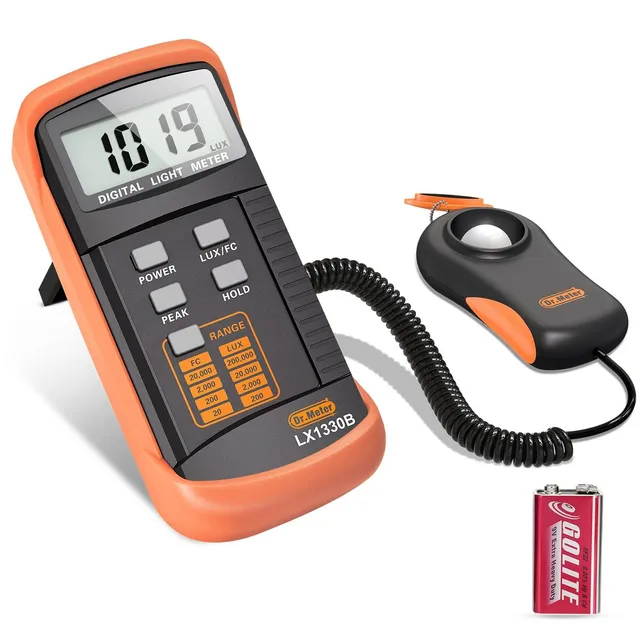
  2. Best budgetDr.meter LX1330B
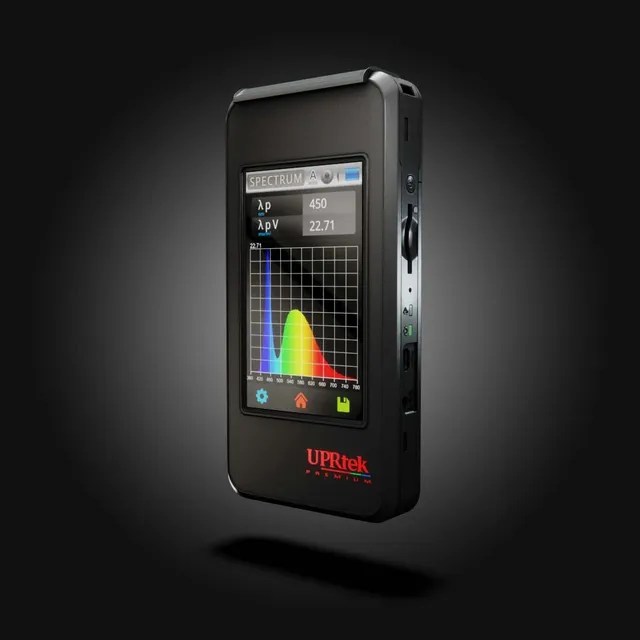
  3. Best for melanopic lightUPRtek MK350S Premium
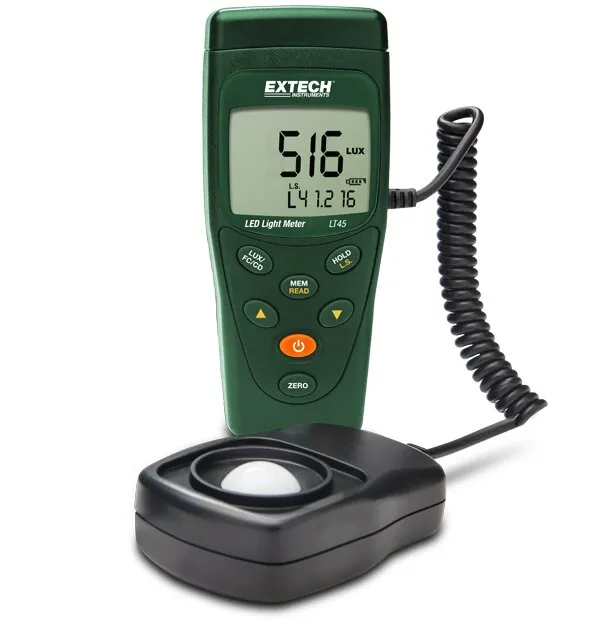
  4. Best for LED lampsExtech LT45
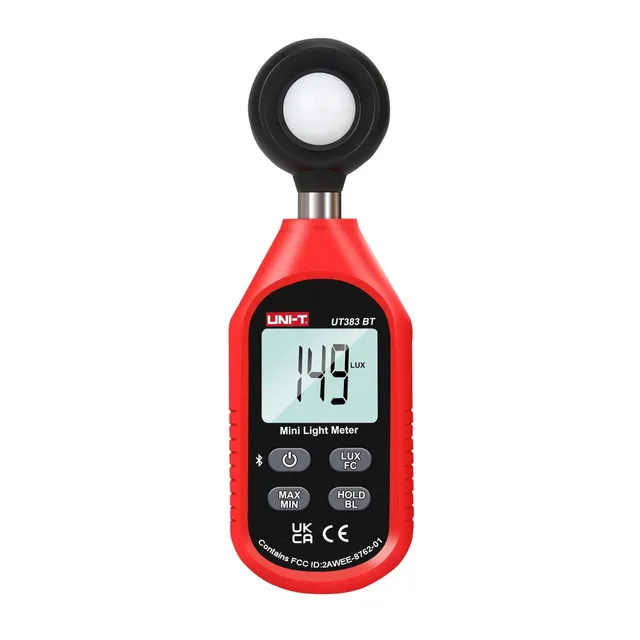
  5. Best with app loggingUNI-T UT383BT

Does it work?

CMixed evidence

A meter measures light; it does not treat anything, so this grade covers the light targets it checks. In a lab study of 55 young adults, evening light of about 25 lux halved melatonin on average, with a more than 50-fold spread in sensitivity between people, and campers living on natural light got over 4 times more daytime light (4,487 vs 979 lux) than at home. When 24 commercial light therapy devices were measured, only 7 met all three clinical criteria. No trial has tested whether owning a meter improves sleep or mood.

Studies behind this grade

Sunlight first

Outdoors you rarely need a meter: even winter camping days averaged about 10,000 lux across the waking day. A meter earns its place indoors, where light is far dimmer, and for checking a SAD lamp at your sitting distance. Why morning sunlight matters.

Sources

Side by side

ProductRangeAccuracyCosine correctedMelanopic readingSensorPrice
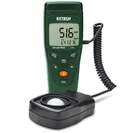
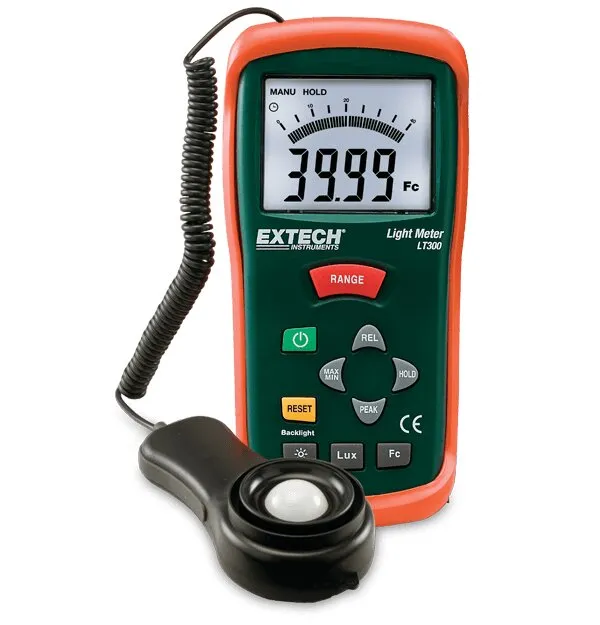
Extech LT300Up to 400,000 lux±5% of readingYes (cosine and color corrected)NoRemote, 30 cm coiled cable$244
Dr.meter LX1330B0.1–200,000 lux±(4% + 10 dgt) below 20,000 luxNot statedNoSeparate probe$45
UPRtek MK350S Premium1–150,000 luxJIS Class AA, DIN Class BNot statedYes (melanopic lux)Built-in spectrometer$4,125
Extech LT45Up to 400,000 lux±3% basicYes (cosine and color corrected)NoRemote, coiled cable to 1.5 m$359
UNI-T UT383BT0–199,900 lux±(4% + 8) below 10,000 luxNot statedNoBuilt-in$35
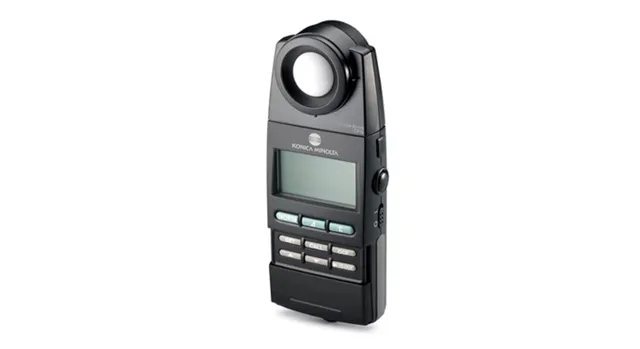
Konica Minolta T-10A0.01–299,900 luxLinearity ±2% ±1 digitYes, f2 within 3%NoDetachable head; 1–10 m corded versions–
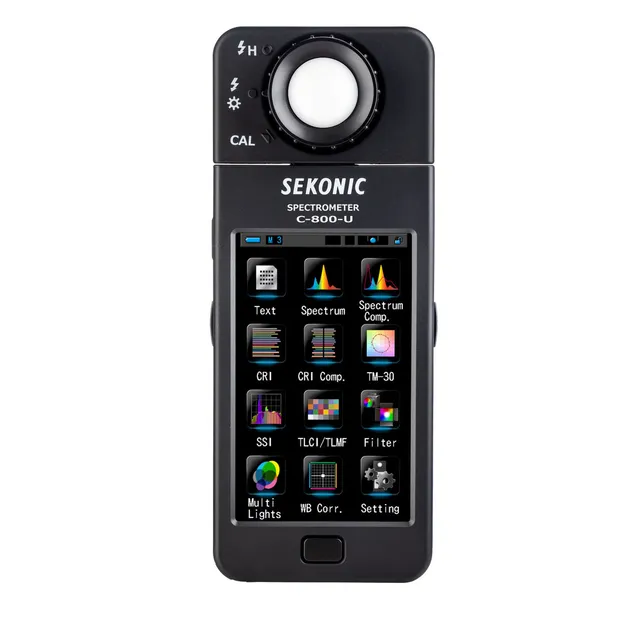
Sekonic C-800 SpectroMaster1–200,000 luxJIS C 1609-1 Class ANot statedNoBuilt-in spectrometer$1,899
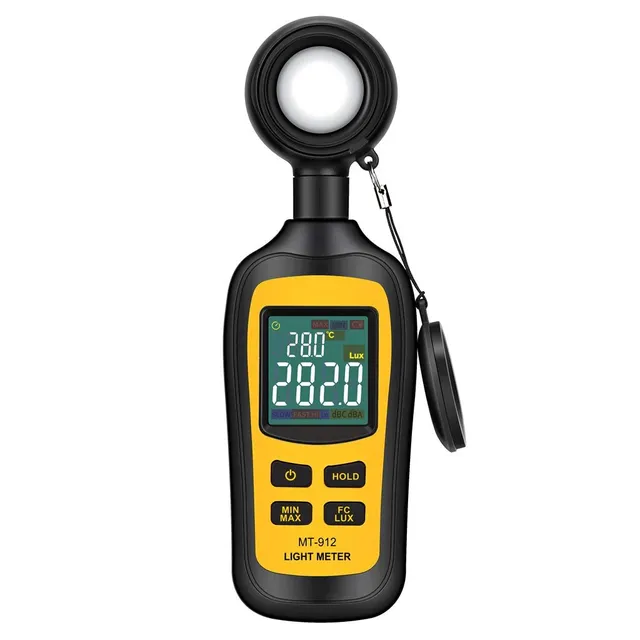
URCERI SMT9120–200,000 lux±3% rdg ±8 dgt below 10,000 luxClaimed (f2 ≤ 2%), unverifiedNoBuilt-in$30

Prices are approximate list prices in USD at the time we checked and change often.

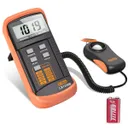
Extech LT45

Best for LED lamps

Extech LT45

by Extech · $359

LED-focused lux meter with ±3% basic accuracy, cosine correction and a 1.5 m sensor cable. An independent test found it tracks a Class A reference closely.

RangeUp to 400,000 lux

Best for: Checking LED lamps and colored LED light where accuracy matters

What to look for

Range
20,000 lux covers any SAD lamp. If you also want to read direct summer sun, get 200,000 lux or more: a bright midday sky can exceed 100,000 lux.
Accuracy
Look for ±5% or better. Budget meters are often calibrated to incandescent light (the Dr.meter manual specifies a 2,856 K lamp), and independent tests show their error under LEDs can swing by 20% depending on the LED.
Cosine correction
Light from a side window or ceiling panels hits the sensor at an angle. A cosine-corrected sensor reads it properly; reference meters quote cosine error within 3%. Many budget meters do not state it at all.
Remote sensor
A sensor on a cable lets you hold it at eye height facing the lamp without your hand or body shading it. Built-in sensors work, but take more care.
Melanopic output
Lux meters cannot read melanopic EDI, the unit the 2022 consensus targets use. Only a spectrometer that reports it can, and the one here costs $4,125. For most people a lux meter plus a correction for bulb color is enough.
Budget
$30 to $45 buys a usable lux meter. $244 to $359 buys cosine-corrected meters with ±3 to 5% specs. The two spectrometers here cost $1,899 and $4,125.

What a lux meter tells you

A lux meter measures illuminance: how much visible light reaches its sensor, weighted by how bright it looks to the eye. For body-clock purposes it checks two things: whether your SAD lamp delivers 10,000 lux at the distance you sit, and whether your desk gets anywhere near daylight levels. A $35 to $45 meter does both.

What it cannot tell you is how strongly that light reaches the body clock. That depends on the spectrum, which needs a spectrometer. More on that below.

How many lux you need, by time of day

A 2022 expert consensus in PLoS Biology set light targets for healthy adults aged 18 to 55, measured at the eye in the vertical plane, about 1.2 m up.1

When Target (melanopic EDI)
Daytime At least 250 lux
Evening, from 3 hours before bed At most 10 lux
Sleep At most 1 lux, as dark as possible

The evening limit is low because the clock is sensitive. In 55 young adults, evening light of about 25 lux halved melatonin on average, and individual sensitivity varied more than 50-fold.2 An earlier study of 23 people exposed to light at night put half of the maximum melatonin suppression at roughly 90 to 110 lux.3

Daytime is where most indoor lives fall short. A bright midday sky can exceed 100,000 lux, while typical indoor lighting is around 200 lux. When 8 adults camped for a week with only natural light, their average waking light rose more than 4-fold (4,487 vs 979 lux), and their melatonin onset moved about 2 hours earlier.4

The light levels chart lists typical readings for common places, and how many lux you need goes deeper on targets.

Lux is not melanopic light

The consensus targets use melanopic EDI, not lux. A lux meter weights light by visual sensitivity. The melanopsin cells that signal the clock respond to a different curve that peaks near 490 nm, in the blue-cyan range.1

For standard daylight (D65) the two numbers match by definition. Electric light usually gives less. Warm white LEDs of about 2,800 to 3,100 K delivered only 0.46 to 0.53 melanopic EDI per lux in one 2023 analysis.5 So a desk reading 500 lux under warm LEDs gets roughly 230 to 265 lux melanopic EDI, right at the daytime floor.

The gap can run the other way too: a blue LED therapy device measured just 51 lux, yet its melanopic lux was 34.5 times its photopic lux.6

A workable rule: under warm white LEDs, aim for about twice the melanopic target in lux. To read melanopic light directly, you need a spectrometer that reports it, such as the UPRtek MK350S Premium. For evening, the reverse applies: warm or amber bulbs cut melanopic light more than the lux reading suggests.

How to check a SAD lamp with a lux meter

Light falls off fast with distance, so the 10,000 lux on the box holds only at the distance the maker specifies. When researchers measured 24 commercial light therapy devices, only 7 met all three clinical criteria: at least 7,000 lux at the recommended distance, at least 5,000 lux 6 inches off center, and an acceptable glare rating. Several gave under 5,000 lux at the recommended distance. Some sold as 10,000 lux devices reached that only at unreasonably close range.6

  1. Sit where you normally sit for a session.
  2. Hold the sensor at eye height, facing the lamp the way your eyes do.
  3. Move closer until the meter reads 10,000 lux, and note that distance.
  4. Check a few inches to each side, since you will not stay perfectly centered.

The SAD lamp guide covers timing and session length, and light therapy lamps compares current models.

Phone apps: fine for rough checks

Phone light meter apps are free and sometimes close, but you cannot tell which. In a 2022 test of 10 phones against a reference meter at 400 lux, errors ranged from 1% (Samsung Galaxy A51) to 99% (Huawei Mate 20 Lite). Three Huawei phones with the same sensor gave different results.7

Android apps read the phone’s ambient light sensor, so every app on one phone gave the same number. iPhones give apps no light sensor, so apps use the camera and results varied by app. The best pairing in that test, an iPhone 11 Pro Max running Photone with a paper diffuser over the lens, stayed within 8% of the reference across five light levels.7

Use a phone to compare rooms or spot big gaps. Do not rely on it for a SAD lamp dose unless you have checked it against a real meter.

How to get a reading that means something

  • Measure at the eye, vertically. A sensor lying flat on a desk measures light falling on the desk, not light entering your eyes.
  • Keep your body out of the way. Hold a remote sensor at arm’s length, or rest a built-in one on something.
  • Mind the angle. Without cosine correction, light arriving from the side is under-read.
  • Treat budget readings under LEDs as approximate. The Dr.meter LX1330B manual states calibration to a 2,856 K incandescent lamp. An independent test of an unbranded LX-1330B found it read one 6,500 K LED 20% high and another LED 8% low against a Class A meter (Budget Light Forum, 2018).
  • Take several readings. Clouds and dimmers change light levels minute to minute.

Who can skip buying one

If you get outdoors in daylight every morning, a meter adds little, because outdoor light dwarfs indoor levels. Time it with the daylight planner and read up on morning sunlight instead.

A meter does not make bright light safe. If you have bipolar disorder, an eye condition, or take a photosensitizing medication, talk to a doctor before starting light therapy.
Footnotes

  1. Brown TM, Brainard GC, Cajochen C, et al. Recommendations for daytime, evening, and nighttime indoor light exposure to best support physiology, sleep, and wakefulness in healthy adults. PLoS Biol. 2022;20(3):e3001571. doi:10.1371/journal.pbio.3001571 ↩ ↩2

  2. Phillips AJK, Vidafar P, Burns AC, et al. High sensitivity and interindividual variability in the response of the human circadian system to evening light. Proc Natl Acad Sci USA. 2019;116(24):12019-12024. doi:10.1073/pnas.1901824116 ↩

  3. Zeitzer JM, Dijk DJ, Kronauer RE, Brown EN, Czeisler CA. Sensitivity of the human circadian pacemaker to nocturnal light: melatonin phase resetting and suppression. J Physiol. 2000;526(3):695-702. doi:10.1111/j.1469-7793.2000.00695.x ↩

  4. Wright KP Jr, McHill AW, Birks BR, Griffin BR, Rusterholz T, Chinoy ED. Entrainment of the human circadian clock to the natural light-dark cycle. Curr Biol. 2013;23(16):1554-1558. doi:10.1016/j.cub.2013.06.039 ↩

  5. Trinh VQ, Bodrogi P, Khanh TQ. Determination and measurement of melanopic equivalent daylight (D65) illuminance (mEDI) in the context of smart and integrative lighting. Sensors. 2023;23(11):5000. doi:10.3390/s23115000 ↩

  6. Oldham MA, Oldham MB, Desan PH. Commercially available phototherapy devices for treatment of depression: physical characteristics of emitted light. Psychiatr Res Clin Pract. 2019;1(2):49-57. doi:10.1176/appi.prcp.2019.20180011 ↩ ↩2

  7. Vujica Herzog N, Dobaj P, Buchmeister B, Spindler L. Comparison between lux meter apps and illumination measuring devices. In: Katalinic B, ed. DAAAM International Scientific Book 2022. Vienna: DAAAM International; 2022:31-46. doi:10.2507/daaam.scibook.2022.03 ↩ ↩2

Questions people ask

How many lux is sunlight?

A bright midday sky can exceed 100,000 lux, while typical indoor lighting is around 200 lux, according to figures reported in a 2013 Current Biology study. That gap is why a week of camping raised people's average daytime light more than 4-fold.

Can I use my phone as a lux meter?

For rough comparisons, yes. In a 2022 test of 10 phones against a reference meter at 400 lux, errors ranged from 1% to 99%, so check your phone against a real meter before trusting it for a SAD lamp.

How many lux should a SAD lamp give?

The research dose is 10,000 lux at the eyes, and most lamps reach it only at the distance the maker specifies. Measure from where you actually sit.

Does a lux meter measure blue or melanopic light?

No. It weights light by how bright it looks, not by its effect on the body clock. Warm white LEDs give only about half as much melanopic light per lux as daylight, so the same lux reading can mean very different things.

How many lux do you need during the day?

A 2022 expert consensus recommends at least 250 lux melanopic EDI at eye level in the daytime, no more than 10 from 3 hours before bed, and no more than 1 while you sleep.

Where should I hold a lux meter?

At eye level, facing the way you look, not flat on the desk. The consensus targets are measured at the eye in the vertical plane, about 1.2 m up.