Best Blue Light Glasses for Sleep (2026)

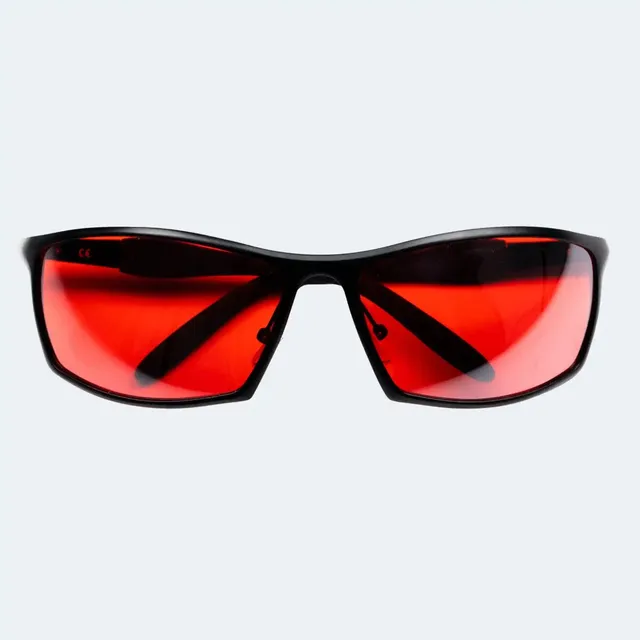
For sleep, the best blue light glasses have dark orange or red lenses that block nearly all light below 500 nm, worn for the 2 to 3 hours before bed. Sleep Swannies are our top pick, and the $16 Uvex Skyper filters just as well in independent lab tests.

Updated Oct 21, 20269 products compared

DisclosureSome links earn us a commission. That never moves a product up the list. How we make money

Quick picks

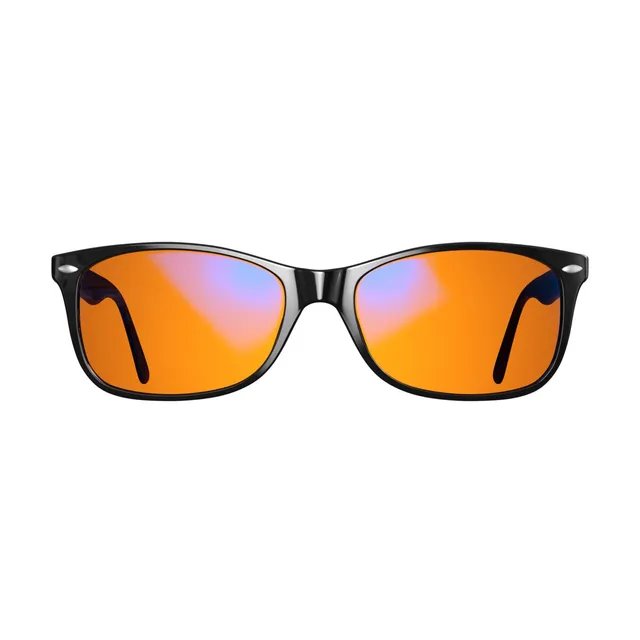
  1. Best overallSwanwick Sleep Swannies Classic
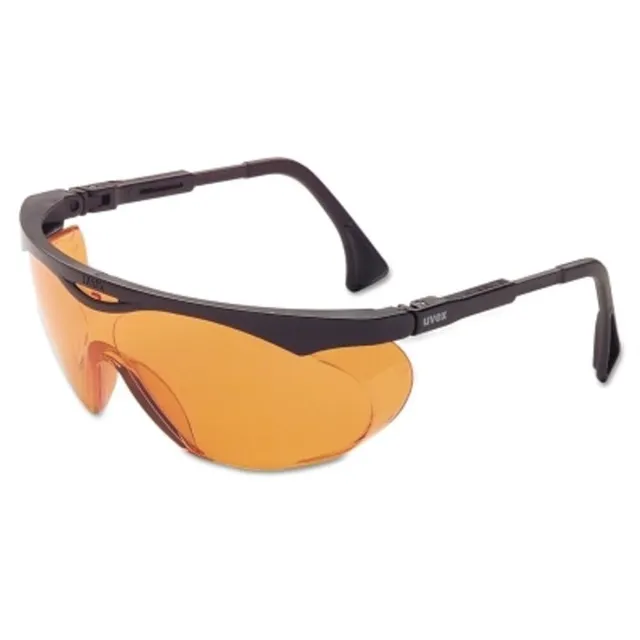
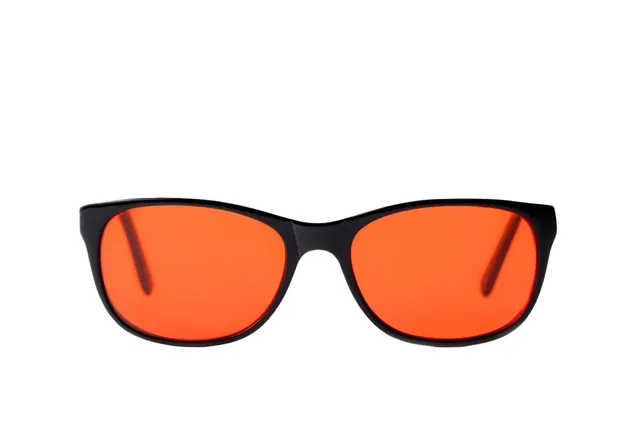
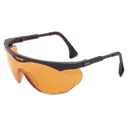
  2. Best budgetUvex Skyper SCT-Orange (S1933X)
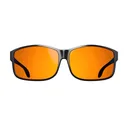
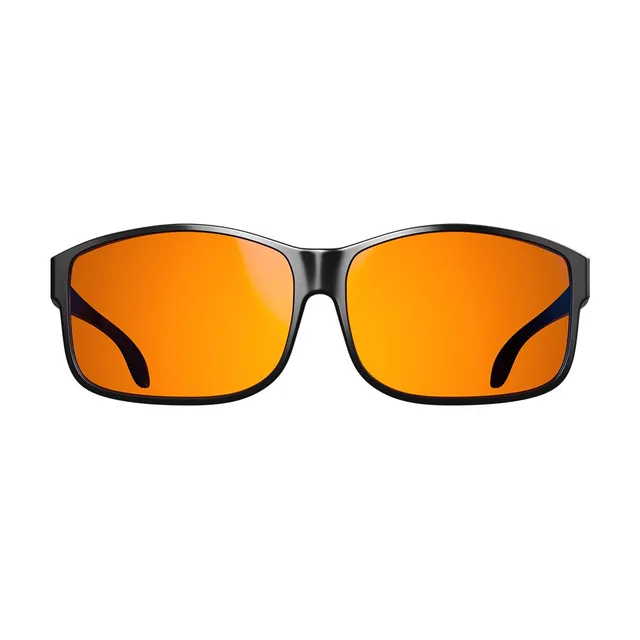
  3. Best fit-overSwanwick Sleep Swannies Fitover
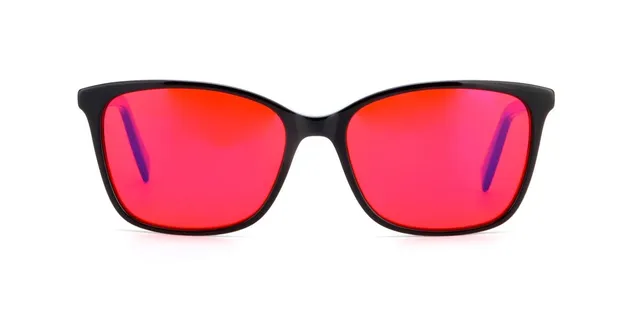
  4. Best red lensBon Charge Morris Blue Light Blocking Glasses

Does it work?

BGood evidence

A 2020 meta-analysis of 12 studies found tinted lenses worn before bed gave a small gain in total sleep time (Hedges' g 0.32), with most benefit in insomnia, bipolar disorder, delayed sleep phase and ADHD. A stricter 2025 meta-analysis of three double-blind crossover trials (n=49) found no significant change in actigraphy: 8.75 minutes more sleep and 4.9 minutes faster sleep onset, both within the margin of error. Lens strength matters: in lab measurements, dark orange Uvex SCT-Orange lenses cut clock-relevant (melanopic) light by about 96%, clear Felix Gray lenses by about 23%.

Studies behind this grade

Sunlight first

Bright days make evening light matter less. In a lab study, evening light suppressed melatonin more after a week of dim days than after a week of bright light. Get outdoor light by day, then wear amber or red lenses for the last 2 to 3 hours before bed. Why morning sunlight matters.

Sources

Side by side

ProductLens tintPublished blockingMelanopic cut (independent lab)Over glassesPrescriptionPrice
Swanwick Sleep Swannies ClassicDeep amber99.5%+ to 500 nm, 90% at 530 nmAbout 95% (mDFD 1.34)Separate Fitover modelYes, incl. progressive$130
Uvex Skyper SCT-Orange (S1933X)Orange (SCT-Orange)98% of blue (listing claim)About 96% (mDFD 1.41)No (S0360X model does)No$16
Swanwick Sleep Swannies FitoverDeep amber99.5%+ to 500 nm, 90% at 530 nmAbout 95% (Sleep lens)Yes, 140 or 150 mm wideWear over your own$160
EMR-TEK NYX Blue Light Blocking GlassesRed (dark orange also sold)Red: 1.1% avg 380 to 500 nm, under 2% to 570 nm (maker report)Not testedNoSingle vision, progressive or bifocal$100
Bon Charge Morris Blue Light Blocking GlassesRed-orange100% 400 to 550 nm (maker curve)Not testedClip-on version soldYes, single or multifocal$130
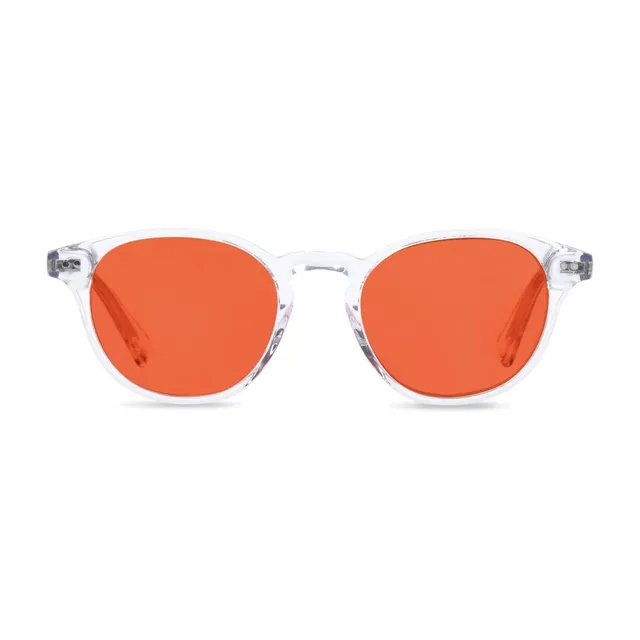
Ra Optics Clyde SunsetRed-orange (Sunset)>99% 380 to 540 nm (maker)Not testedNoSingle vision, SPH +2 to −6$174
Chroma Nightshades ClassicRed, with violet pass98.5% 425 to 570 nm (maker)Not testedNoNone listed$110
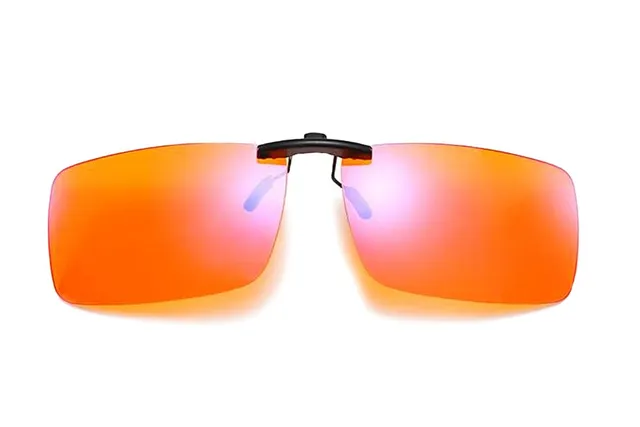
Bon Charge Clip On Blue Light Blocking GlassesRed-orange100% 400 to 550 nm (maker curve)Not testedClip-onUses your own glasses$70
TrueDark Twilights ClassicDeep red99% blue, green, violet (no nm given)Not testedSeparate Fitovers ($119)No$159

Prices are approximate list prices in USD at the time we checked and change often.

Chroma Nightshades Classic

Chroma Nightshades Classic

by Chroma · $110

Red evening lens that Chroma says cuts 98.5% of light from 425 to 570 nm but deliberately lets some violet through. No independent test or prescription.

Lens tintRed, with violet pass

Best for: People who want a red sleep lens with a published curve and slightly better colour perception, and don't need prescription lenses

What to look for

A full transmission curve
Look for under 1% transmission from 400 to 500 nm and about 10% or less at 530 nm. A bare '99% of blue light' claim can describe a lens that stops at 450 nm or one that runs to 550 nm, so ask for the curve.
Independent measurement
Prefer lenses with third-party data. In a 2025 lab analysis, only glasses with a melanopic filtering density (mDFD) of 1 or more, meaning at least 90% less clock-relevant light, earned the blue-blocker label. Clear and pale yellow lenses fell far short.
Dark orange or red, not pale amber
Dark orange passes about half of visible light, enough to read and move around. Red blocks more green but looks darker. Pale amber lenses can cut under half the melanopic light, which is not enough for sleep.
Wraparound or large lenses
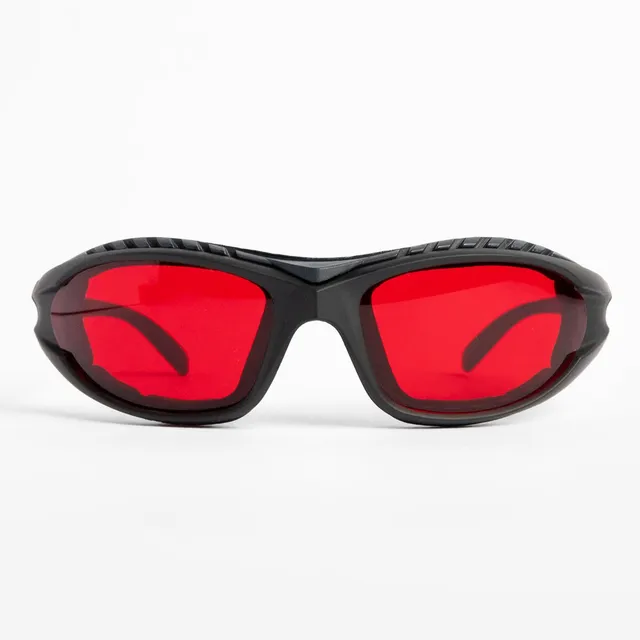
All 16 intervention studies in a 2025 review used wraparound frames. Small front-only lenses let side light reach the eye.
A plan for your own glasses
If you wear glasses, choose a prescription pair, a fit-over that is wider and taller than your frames (compare the mm measurements), or a clip-on.
Price for what you get
About $16 to $30 buys lab-verified filtering. Paying $130 or more buys frames, prescription lenses and looks, not stronger filtering.

Blue light glasses only help sleep if the lens is dark enough. The best blue light glasses for sleep are deep orange or red, pass under 1% of light from 400 to 500 nm, and wrap around your eyes. Wear them for the 2 to 3 hours before bed. Clear “computer” lenses do almost nothing for your body clock.

How blue light blocking glasses work

Your body clock reads evening light through melanopsin, a retinal pigment most sensitive to blue light near 480 nm.1 An international expert panel recommends keeping melanopic light at the eye below 10 lux for the 3 hours before bed.2 Bright, cool-white lighting can exceed that. Wavelength matters: in a study of 15 volunteers, 2 hours of blue and green light at night suppressed melatonin by 65 to 81% and delayed the body clock 27 to 36 minutes, more than amber or red light of the same energy.3

Orange and red lenses remove the short wavelengths that drive melanopsin and pass enough yellow and red light to see by. In a 2025 lab analysis of 26 commercial glasses, dark orange models such as Uvex SCT-Orange and Night Swannies reduced typical indoor lighting to about 1 to 12 lux melanopic while still passing 51 to 115 lux of ordinary visible light.1

What the research says about blue light glasses and sleep

The evidence is real but thin. A 2020 meta-analysis pooled 12 studies of tinted lenses worn before bed. It found a small gain in actigraphy-measured total sleep time (Hedges’ g 0.32) and better sleep-quality scores, with most benefit in insomnia, bipolar disorder, delayed sleep phase and ADHD.4

A stricter 2025 meta-analysis kept only three double-blind crossover trials that measured sleep with actigraphy (49 people). It found no significant effect: 8.75 minutes more sleep and 4.9 minutes faster sleep onset, both within the margin of error.5

Single trials show the range:

  • In 14 adults with insomnia, amber lenses worn 2 hours before bed for a week raised actigraphy-measured sleep time compared with clear lenses.6
  • In 20 adults, amber lenses worn 3 hours before bed improved self-rated sleep quality over two weeks compared with yellow, UV-only lenses.7
  • In 13 teenage boys using LED screens, blue blockers reduced melatonin suppression but did not change sleep stages measured in the lab.8

That is why the category gets a B: several small RCTs, mostly positive on self-reported sleep, mixed on objective sleep.

Limits of this research

The null result and the positive ones both have weak spots, so read them with care.

Why the null meta-analysis is not the last word. The 2025 analysis pooled only three trials and 49 people. Its estimate for extra sleep ran from 35 minutes less to 53 minutes more, so it cannot rule out a meaningful benefit. Two of the three trials enrolled healthy sleepers or athletes without sleep complaints, who have little room to improve. Each trial lasted about a week, and the authors note that actigraphy can miss subtle changes in sleep.5

Lens strength varies. Trials usually name the tint, not how much light it blocks. In lab tests, lenses sold as “amber” ranged from about 48% to 96% less clock-relevant light, so a weak lens can dilute a trial’s result.1

Why the positive results need care too. Most trials are small, and the strongest effects are on self-rated sleep. Participants can see that their lenses are tinted, so expectations can shape self-reports even in trials described as double-blind. The 2020 meta-analysis found its benefit mainly in people with insomnia, bipolar disorder, delayed sleep phase or ADHD.4

What we take from it. Dark amber or orange lenses are low-risk and cheap, and the case is strongest if you have trouble falling asleep or run late. Longer trials of strong lenses in poor sleepers are the missing piece, and that is where we would expect the biggest effect.

What I noticed wearing them

Personal experience from Umar Luqman, who runs this site. One person, not a trial.

I wear Spectra479 Night Shades, orange-lens wraparound glasses, from about 8 pm in Malaysia, and aim to sleep around 10 pm after Isya prayer. What I notice:

  • I feel sleepy earlier and fall asleep faster.
  • I wake earlier and feel more refreshed.
  • It works best with blackout curtains, so the room stays dark through the night.
  • I also get at least 20 minutes outside soon after sunrise every day. Morning light moves the body clock earlier, so I get sleepy sooner at night; the glasses handle the evening half. See why morning sunlight matters.
  • I get sleepy faster still when I wear long sleeves and a head covering in the evening.

On that last point, the research is less clear. Human skin does contain light-sensing opsins, but in people they have been linked to wound healing, pigmentation, hair growth and skin aging; only in animals such as zebrafish and frogs have they been shown to set the body clock.9 When researchers shone bright light on the backs of people’s knees, it did not shift the clock.10 The eyes remain the main route, and what I feel may come from the glasses, the routine, or both.

Spectra479 does not publish a transmission curve and states blocking only from 450 to 510 nm, short of the band up to about 560 nm that still affects the clock. That misses our first criterion, so these glasses are not ranked above.

Clear computer glasses barely filter

Most blue light glasses sold for screen use have clear or near-clear lenses. In the 2025 lab analysis, Felix Gray’s clear lens cut melanopic light by about 23% and Gunnar’s pale yellow lens by about 34%. Uvex SCT-Orange cut about 96%.1 The authors wrote that clear lenses sold as blue blockers “do not deserve to be in the same category” as the other filters they measured.

They don’t help much with eye strain either. A 2023 Cochrane review of 17 trials found blue-light filtering lenses may not reduce eye strain from computer use, and their effect on sleep was uncertain.11 Our guide on whether blue light glasses work goes into more detail.

How to read a lens spec

A claim of “blocks 99% of blue light” tells you little on its own. Ask for a transmission curve, which shows the share of light that passes at each wavelength. Then check three things:

  • 400 to 500 nm: under 1% transmission.
  • 530 nm: about 10% or less. The circadian-active band runs to roughly 560 nm.12
  • Overall brightness: around 50% of visible light for dark orange, less for red. Very dark lenses make reading and walking around harder.

Colour names are unreliable. In the same 2025 tests, Uvex’s lighter “Amber” lens cut only about 48% of melanopic light, while its SCT-Orange cut 96%.1 A 2022 test of 50 lenses found red tints passed the least circadian-active light, and orange tints passed nearly as little while keeping more of the rest of the spectrum.12

Brands differ in what they publish. Swanwick posts a full Colts Laboratories curve for its Sleep lens. Bon Charge and Ra Optics publish their own curves. TrueDark gives no wavelength range at all.

How to use them for sleep

  • Put them on 2 to 3 hours before your usual bedtime and keep them on until lights out. Trials ranged from 1.5 to more than 4 hours.1
  • Don’t wear them in daytime. They cut the bright light your clock needs by day and can lower alertness.1
  • Don’t drive in them. Dark lenses reduce visibility and colour discrimination, and driving safety has not been tested.1
  • Dim the rest of the house too. Amber bulbs let you take the glasses off in the evening, and our guide to the best light color for sleep explains why warm, dim light works.
  • Use the light exposure planner to time bright light in the morning and dim light at night, and the sleep calculator to pick a bedtime.
  • Night shift workers can wear them on the way home as a passenger, but even dark orange lenses only cut daylight by about 40 to 70%.1 See shift work sleep.

Who should be careful

  • Bipolar disorder. Blue blockers have been tested as an add-on treatment for mania. In a 23-patient trial, glasses worn from 6 pm to 8 am cut mania scores by 14.1 points versus 1.7 for clear glasses, and two patients developed depressive symptoms that reversed.13 Use them for mood only under your psychiatrist’s care.
  • Low mood or headaches. Trials report occasional low mood, headache and discomfort.11
  • Eye conditions or poor night vision. Ask your optometrist first, especially before buying dark red lenses.

How we ranked these

We did not lab-test these glasses, and the pair Umar wears is not in the ranking. Rankings use published transmission curves, independent lab measurements, prescription and fit-over options, and price. Commission never affects rank.
Footnotes

  1. Glickman GL, Harrison EM, Herf M, Herf L, Brown TM. Optimizing the potential utility of blue-blocking glasses for sleep and circadian health. Translational Vision Science & Technology. 2025;14(7):25. doi:10.1167/tvst.14.7.25 ↩ ↩2 ↩3 ↩4 ↩5 ↩6 ↩7 ↩8 ↩9

  2. Brown TM, et al. Recommendations for daytime, evening, and nighttime indoor light exposure to best support physiology, sleep, and wakefulness in healthy adults. PLoS Biology. 2022;20(3):e3001571. doi:10.1371/journal.pbio.3001571 ↩

  3. Wright HR, Lack LC. Effect of light wavelength on suppression and phase delay of the melatonin rhythm. Chronobiology International. 2001;18(5):801-808. doi:10.1081/cbi-100107515 ↩

  4. Shechter A, et al. Interventions to reduce short-wavelength (“blue”) light exposure at night and their effects on sleep: a systematic review and meta-analysis. Sleep Advances. 2020;1(1):zpaa002. doi:10.1093/sleepadvances/zpaa002 ↩ ↩2

  5. Luna-Rangel FA, et al. Efficacy of blue-light blocking glasses on actigraphic sleep outcomes: a systematic review and meta-analysis of randomized controlled crossover trials. Frontiers in Neurology. 2025;16:1699303. doi:10.3389/fneur.2025.1699303 ↩ ↩2

  6. Shechter A, Kim EW, St-Onge MP, Westwood AJ. Blocking nocturnal blue light for insomnia: a randomized controlled trial. Journal of Psychiatric Research. 2018;96:196-202. doi:10.1016/j.jpsychires.2017.10.015 ↩

  7. Burkhart K, Phelps JR. Amber lenses to block blue light and improve sleep: a randomized trial. Chronobiology International. 2009;26(8):1602-1612. doi:10.3109/07420520903523719 ↩

  8. van der Lely S, et al. Blue blocker glasses as a countermeasure for alerting effects of evening light-emitting diode screen exposure in male teenagers. Journal of Adolescent Health. 2015;56:113-119. doi:10.1016/j.jadohealth.2014.08.002 ↩

  9. Suh S, Choi EH, Atanaskova Mesinkovska N. The expression of opsins in the human skin and its implications for photobiomodulation: a systematic review. Photodermatology, Photoimmunology & Photomedicine. 2020;36(5):329-338. doi:10.1111/phpp.12578 ↩

  10. Wright KP Jr, Czeisler CA. Absence of circadian phase resetting in response to bright light behind the knees. Science. 2002;297(5581):571. doi:10.1126/science.1071697 ↩

  11. Singh S, et al. Blue-light filtering spectacle lenses for visual performance, sleep, and macular health in adults. Cochrane Database of Systematic Reviews. 2023;8:CD013244. doi:10.1002/14651858.CD013244.pub2 ↩ ↩2

  12. Mason BJ, Tubbs AS, Fernandez FX, Grandner MA. Spectrophotometric properties of commercially available blue blockers across multiple lighting conditions. Chronobiology International. 2022;39(5):653-664. doi:10.1080/07420528.2021.2021229 ↩ ↩2

  13. Henriksen TE, et al. Blue-blocking glasses as additive treatment for mania: a randomized placebo-controlled trial. Bipolar Disorders. 2016;18:221-232. doi:10.1111/bdi.12390 ↩

Questions people ask

Do blue light glasses actually help you sleep?

Dark amber and red lenses have modest evidence. A 2020 meta-analysis of 12 studies found a small increase in total sleep time, mostly in people with insomnia, bipolar disorder, delayed sleep phase or ADHD, while a stricter 2025 analysis of three trials found no significant effect. Clear computer lenses filter too little light to matter.

How long before bed should you wear blue light blocking glasses?

Put them on 2 to 3 hours before your usual bedtime and keep them on until lights out. Trials used anywhere from 1.5 to more than 4 hours, and expert lighting guidance targets dim, low-blue light for the 3 hours before sleep.

Are orange or red glasses better for sleep?

Red lenses block more green light, while dark orange lenses let more light through so you can see. A 2022 test of 50 lenses found orange tints passed nearly as little circadian-active light as red with better visibility, and most sleep trials used dark orange.

Do clear blue light glasses work?

Not for sleep. In lab measurements, clear Felix Gray lenses cut melanopic light by about 23% versus about 96% for Uvex SCT-Orange, and a 2023 Cochrane review found blue-light filtering lenses may not reduce eye strain from computer use.

Can you wear blue light blocking glasses during the day?

Avoid dark amber or red lenses in daytime. Daytime light supports a stable body clock, and filtering it can lower alertness, which matters at work or behind the wheel.

Are blue light blocking glasses safe?

For most people, yes. Trials report occasional headache and low mood, and you should not drive in dark lenses. People with bipolar disorder should use them only with their psychiatrist, because they can shift mood.