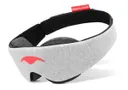
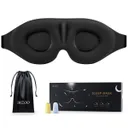
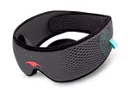
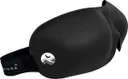
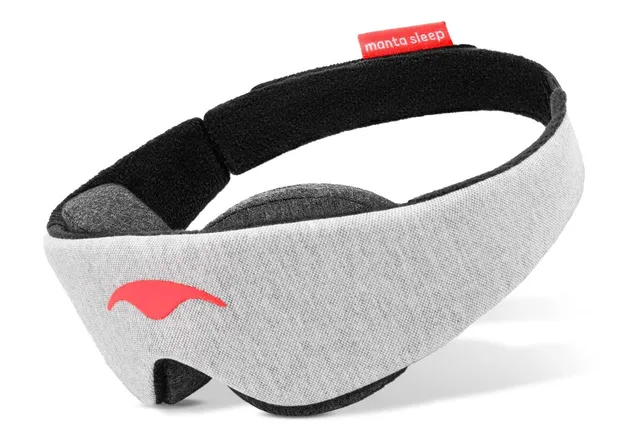
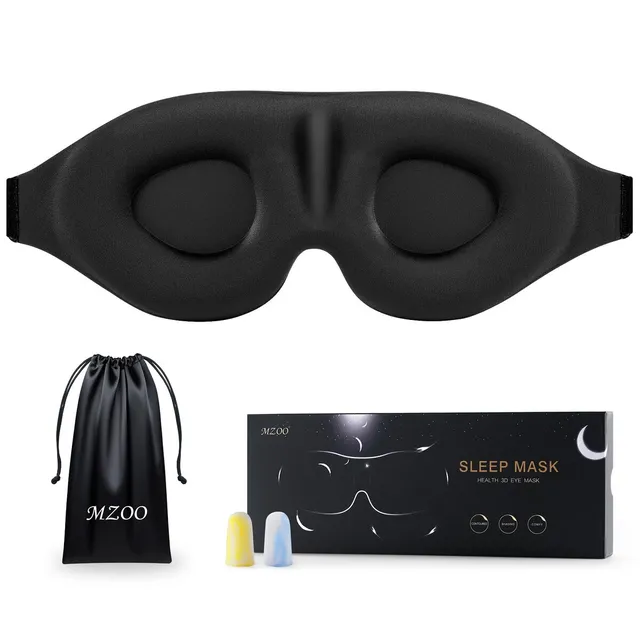
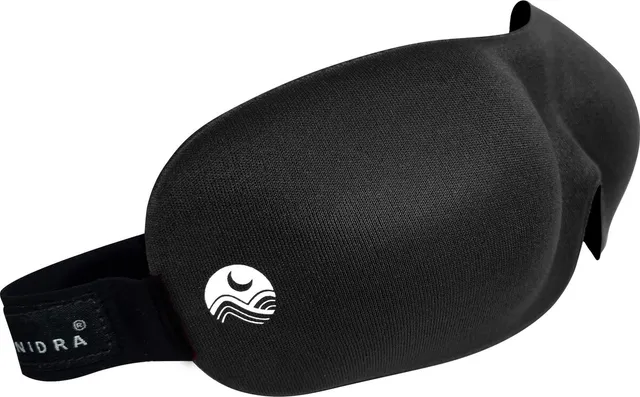
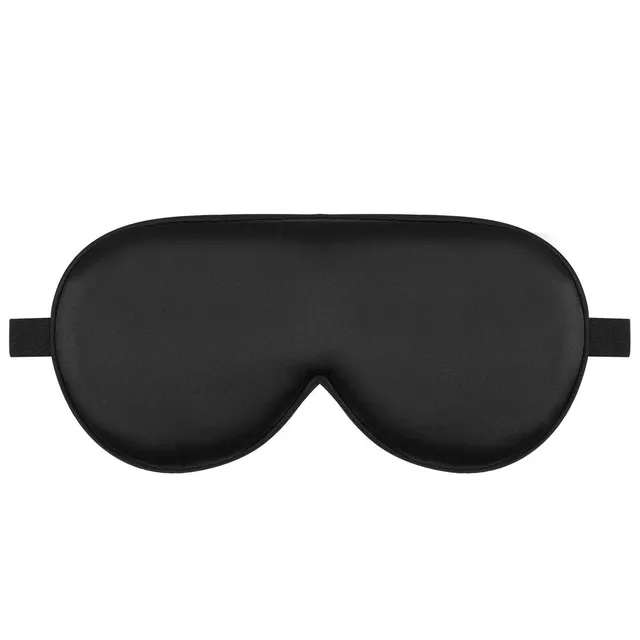
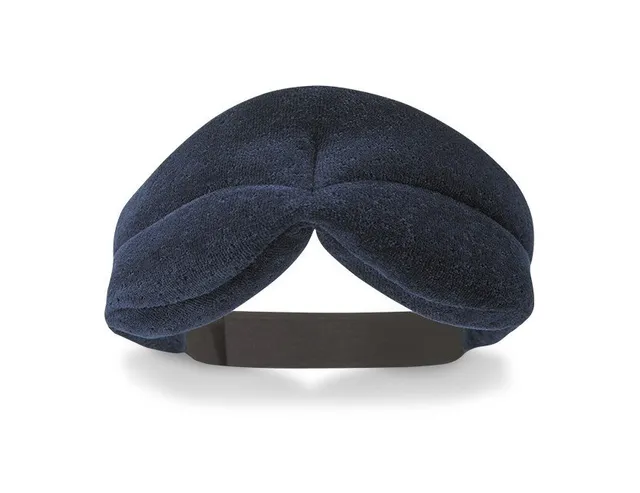
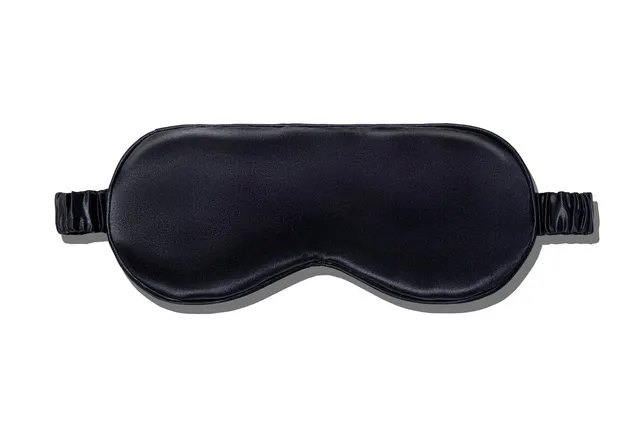
The best sleep mask blocks light at the nose and brow without pressing on your eyelids. Contoured eye-cup masks do this better than flat ones. The Manta sleep mask ($39) ranks first because its cups move to fit your face and it is machine washable. The MZOO (about $18) is the budget take on the same design.
How these sleep masks were ranked
Rankings come from published specs, care instructions, return policies and the research below. No mask on this page was physically tested. Every “100% blackout” claim on this page is the brand’s own, not an independent light measurement. Commission plays no part in the order, and several picks are sold only on Amazon.
Why darkness matters even with your eyes closed
Closed eyelids are a filter, not a shutter. Measurements of human eyelids found an average optical density of 2.1 between 450 and 650 nm, which means roughly 1% of light gets through.1 That can be enough to register. In a small lab study (6 adults), an hour of green light shone through closed eyelids at night cut melatonin by 36% to 56% compared with a dark night.2
Room light during sleep also changes the body without waking you. When 10 healthy adults slept one night under 100 lux of overhead light, their nighttime heart rate and next-morning insulin resistance rose compared with 10 adults who slept in under 3 lux. Melatonin did not differ between the groups.3 A mask is the cheapest way to get close to that dim condition when you cannot control the room.
What the research says about sleep masks
Most trials are in intensive care units, where lights and alarms run all night. A 2021 meta-analysis of 13 randomized trials (797 ICU patients) found eye masks alone improved self-rated sleep quality, with a standardized mean difference of 1.56.4 A Cochrane review was more cautious. It rated the ICU evidence low quality and noted that most studies measuring sleep objectively found no benefit from masks or earplugs.5
In a lab simulation of ICU noise and light, 14 healthy adults given earplugs plus eye masks got more REM sleep, fewer arousals and higher melatonin.6 Masks and earplugs were used together, so the mask’s share is unknown.
The best data in healthy people is a 2023 crossover study. Eighty-nine adults aged 18 to 35 slept with their curtains open during a UK summer, one week with a light-blocking mask and one week without light blocked. With the mask they learned word pairs slightly better (d = 0.19) and reacted faster (d = 0.16) the next day.7 Self-rated sleep quality did not improve in either of the study’s two experiments, and hours slept did not differ. The gains are small but cost little to get.
What makes the best sleep mask: contoured cups vs flat
A flat mask seals by pressing against your face, so it rests on your eyelids and relies on strap tension to close the gap at the nose. Contoured masks use molded foam cups that ring each eye socket and leave room to blink.
The nose bridge is the usual leak. Padding that fills that gap matters more than the face fabric. MZOO lists 22 mm of nose padding, and Alaska Bear adds a raised nose curve to an otherwise flat silk mask.
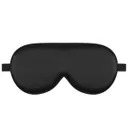
Silk suits people who dislike foam against the skin. But Slip makes no light-blocking claim for its flat silk mask, and the brand sells separate contour and “blockout” versions for that. If darkness is the goal, choose the shape first and the fabric second.
Sleep headphones: masks with built-in speakers
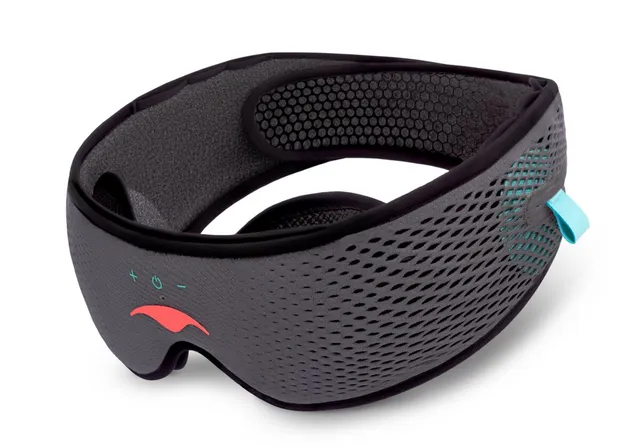
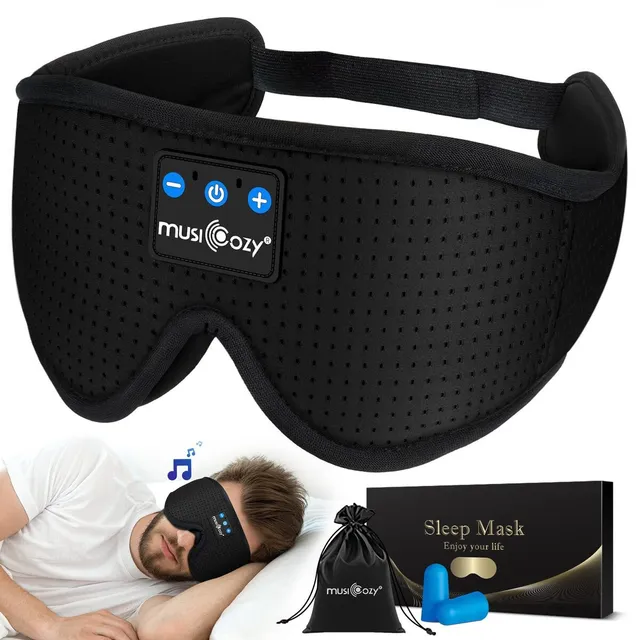
Sleep headphone masks put thin speakers in the strap so you can play white noise or podcasts while blocking light. Check three things: a battery that outlasts your night, electronics you can remove for washing, and speaker thickness if you sleep on your side.
Manta SOUND lists speakers about 5 mm thick, a 24-hour battery at full volume and auto-off after 30 minutes without audio. The MUSICOZY 3D mask costs far less and lists up to 14 hours of playtime, though its listing is inconsistent on the Bluetooth version. Keep the volume low, since you wear it for hours.
Is the Manta sleep mask worth it?
For most people, yes. At $39 the Manta sleep mask gets you cups that slide and tilt to fit different faces, a machine-washable build and a 60-day money-back guarantee. The MZOO costs about half as much with fixed contoured cups, but it is hand wash only. If Manta’s round cups press into the pillow when you lie on your side, the Manta PRO ($85) uses C-shaped cups with tapered edges.
How to get full darkness with a sleep mask
Put the mask on in a lit room, open your eyes and look down. Light at the nose or cheeks means the cups or strap need adjusting. If early dawn wakes you, pair the mask with blackout curtains so the room stays dark if the mask slips off. Our guide on whether blackout curtains help you sleep covers the room side.
Masks earn their keep where you cannot control the light: daytime sleep after a night shift (see shift work sleep), planes and hotel rooms across time zones (see the jet lag guide and jet lag planner), and naps.
Who should skip a sleep mask
If you wake with a sunrise alarm clock, a mask blocks the light that does the waking. Take the mask off when you get up and see the morning sunlight guide for why early light matters. If you have an eye condition or recent eye surgery, ask your eye doctor before wearing anything that sits on or near the eyes. If foam irritates your skin, pick a mask you can wash often.